Ocean Plastic & Sea Turtles
Sea turtles are affected by plastic during every stage of their life. They crawl through plastic on the way to the ocean as hatchlings, swim through it while migrating, confuse it for jellyfish (one of their favorite foods), and then crawl back through it as adults. Thousands of sea turtles, whales, and other marine mammals, and more than 1 million seabirds die each year from ocean pollution and ingestion or entanglement in marine debris.
Five Ways Plastic Affects Sea Turtles
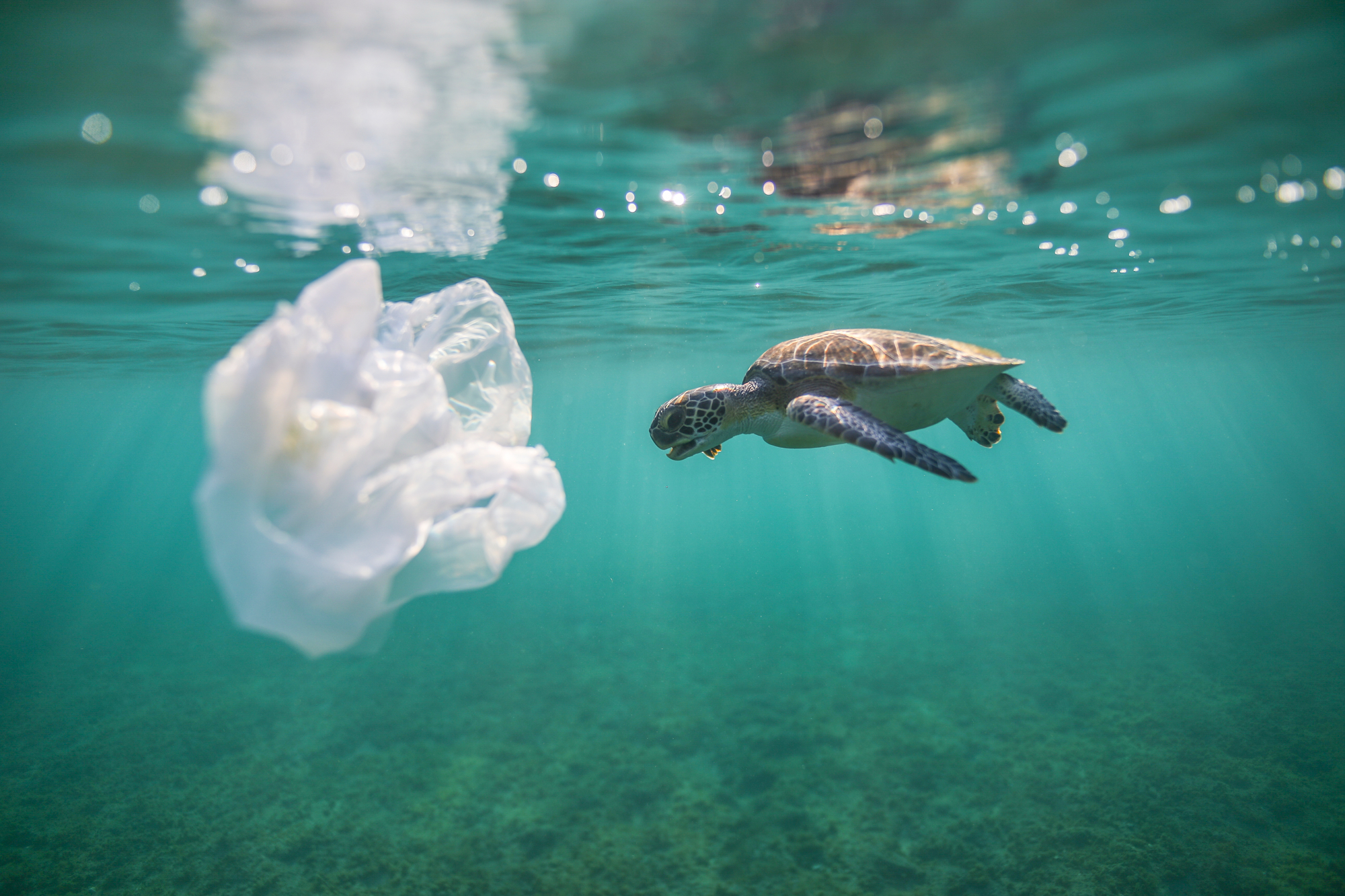
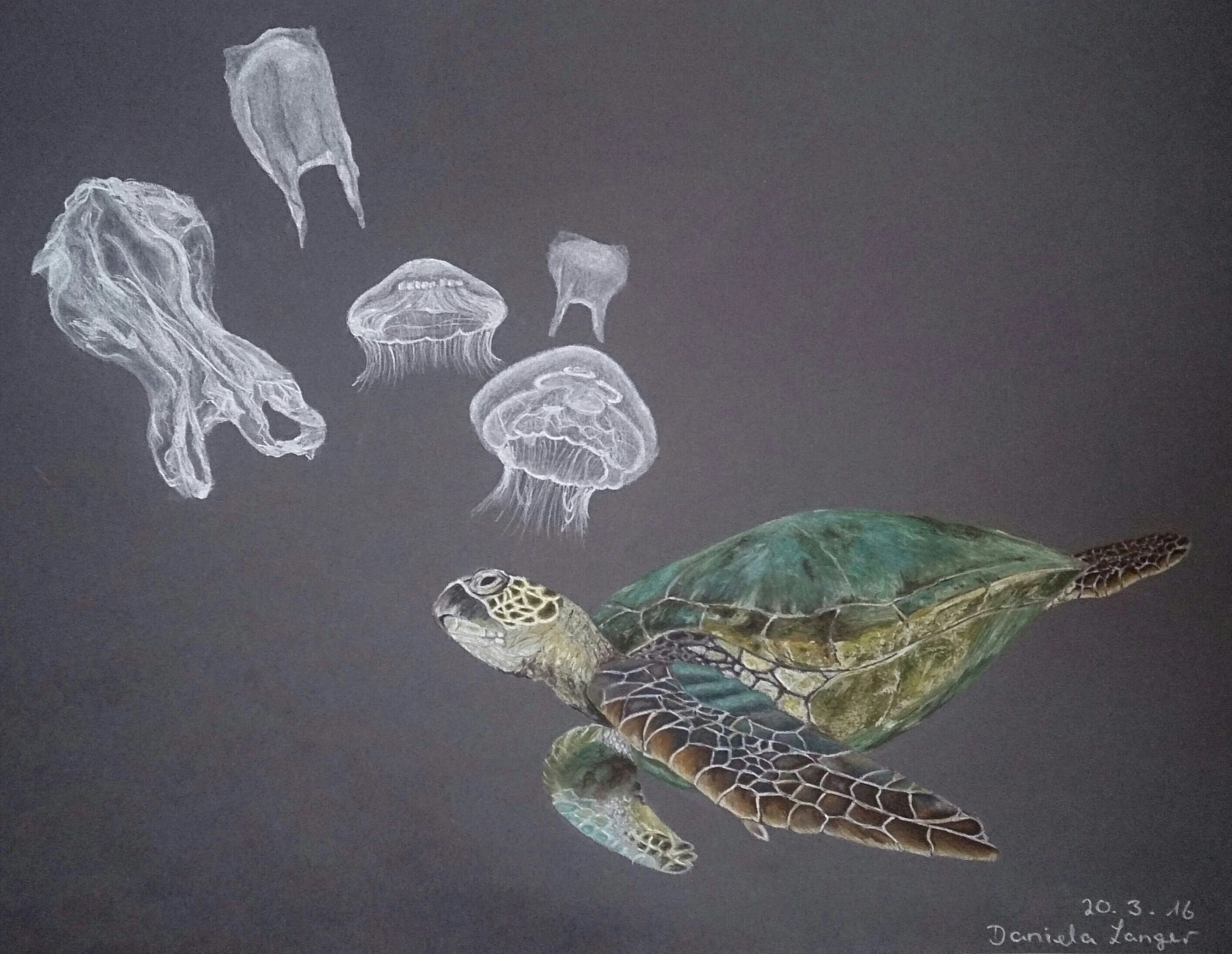
Sea turtles can confuse plastic bags for jellyfish. A turtle in the water can’t tell the difference and will often eat the bag, which gets stuck in their stomach.
Trash on nesting beaches. Adult sea turtles in many places need to crawl through collected debris to find a place to nest and hatchlings can get caught in the debris trying to make their way to the ocean. Tiny bits of plastic in the sand can also affect nests and hatchlings.
They can get stuck in it while swimming. Many turtles make long migrations and pass through areas with a lot of ocean plastic. They can get caught in things like six pack rings or discarded fishing gear.
Mylar balloons filled with helium can also look like jellyfish. These balloons can travel hundreds of miles in the air and land in rivers or the ocean.
They can consume microplastic from their food. Tiny bits of plastic consumed by fish or other animals can then be eaten by those who eat them, like turtles (and humans.)
Most trash reaches the seas via rivers, and 80% originates from landfills and other urban sources. This waste, which is also consumed by fish and can entangle sharks and damage coral reefs, tends to accumulate in gyres (areas of slow spiraling water and low winds) and along coastlines.
There are 5 major ocean gyres worldwide. In the Pacific Ocean, the North Pacific Gyre is home to the “Great Pacific Garbage Patch”, a large area that is approximately the size of Texas with debris extending 20 feet (6 meters) down into the water column. It’s estimated that this “plastic island” contains 3.5 million tons of trash and could double in size in the next 5 years.
Researchers have also estimated that for every 2.2 pounds (1 kilogram) of plankton in this area, there is 13.2 pounds (6 kilograms) of plastic. Common marine debris items includes things like cigarette butts, cans, plastic bags and bottles, styrofoam, balloons, lighters, and toothbrushes. Discarded or lost fishing gear such as lines, nets and buoys are especially dangerous to sea life.
Did You Know?
Plastic bags are petroleum-based and do not biodegrade. Latex (in balloons) is technically biodegradable but take a very long time and mylar (the shiny stuff) is made from plastic and does not biodegrade.
Sea turtles and other marine creatures mistake plastics and other garbage as food (such as jellyfish) and ingest it. This mistake causes blockages within their digestive system and eventual death.
According to the US EPA, Americans use more than 380 billion plastic bags and wraps each year. It takes 12 million barrels of oil to produce this many bags. Worldwide, as many as one trillion plastic bags are used each year. This equates to 100 million barrels of oil!
A 2015 study estimated more than 15 trillion (!) pieces of plastic trash are in the ocean, and growing every year.
WHAT IS SEE TURTLES?
We're a nonprofit organization that protects sea turtles through conservation travel and volunteer tours, our Billion Baby Turtles, Too Rare To Wear, & Sea Turtles & Plastic programs, our education programs, and by promoting inclusivity in the sea turtle community. Our award-winning programs help save sea turtle hatchlings on important nesting beaches around the world, work with the tourism industry to end the turtleshell trade, and get plastic out of sea turtle habitats. Learn more about our organization.
Photo credits: Ben J, Hicks (banner), drawing by Daniela Langer, Neil Osborne