

What Do Sea Turtles Eat?
What a sea turtle eats depends upon the species. Some are omnivores, eating a variety of plants and animals, while the hawksbill and the leatherback are specialists, subsisting primarily of sponges (hawksbills) and jellyfish (leatherbacks).
Hawksbills for example, are mainly found on and around coral reefs where their main prey sponges are found. Greens forage among seagrass beds and nearshore habitats, and leatherbacks, which are deep divers, are found in pelagic (open ocean) environments where they feed exclusively on jellyfish and other soft-bodied invertebrates that float in the water column.
WHAT ADULT SEA TURTLES EAT
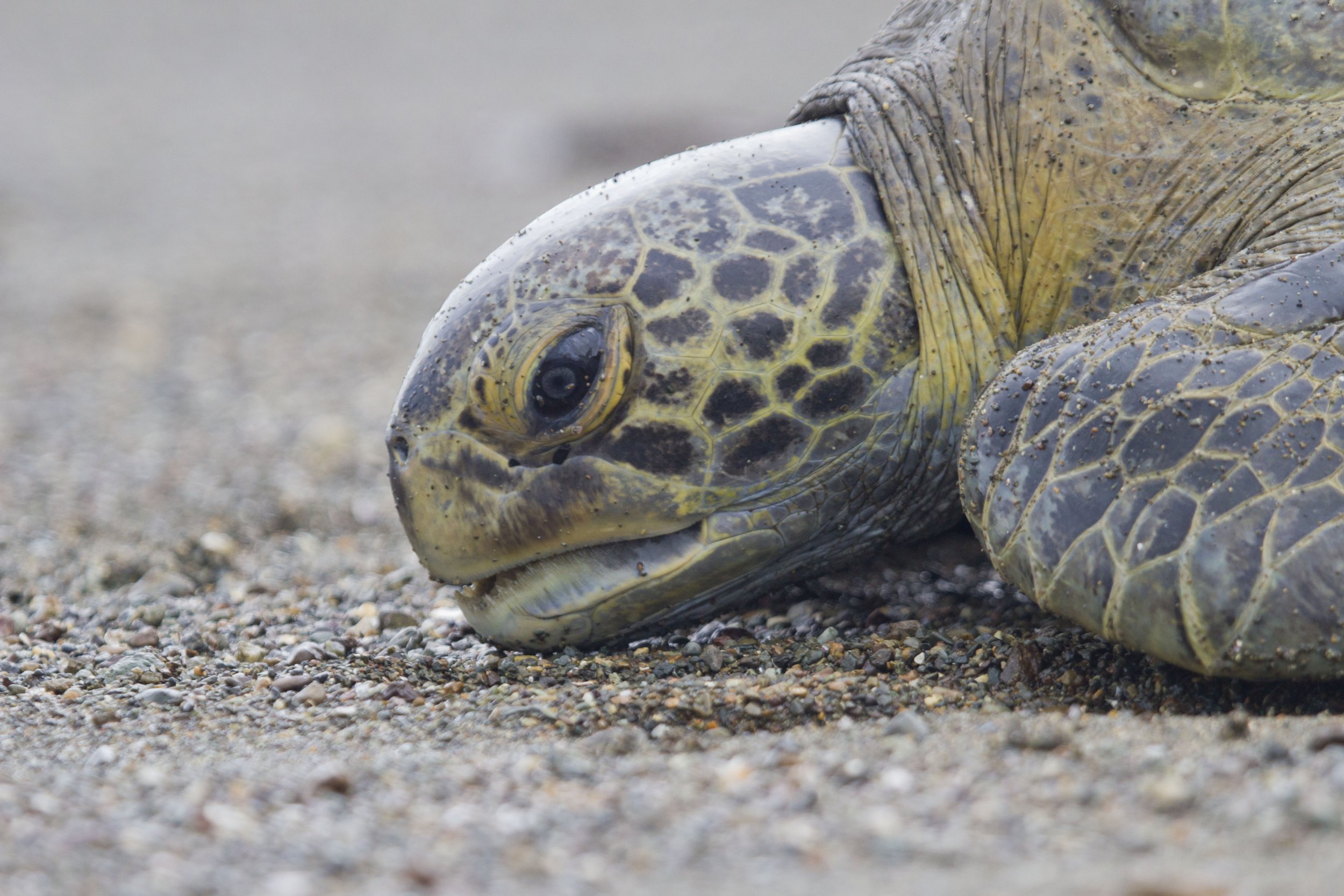
Green: Adults are referred to as herbivores although as hatchlings they are omnivores. Their diet consists primarily of algae, seagrasses, and seaweed. Greens have a finely serrated (sawlike) beak that allows them to scrape algae off rocks and tear grasses and seaweeds.
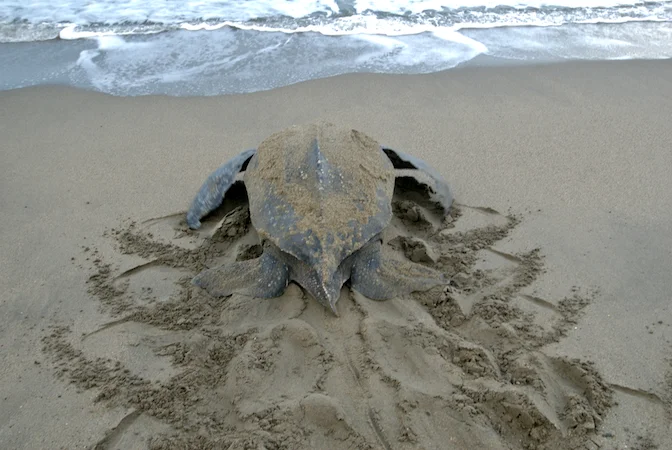
Leatherback: Sometimes referred to as gelatinivores (eating gelatinous prey) because their diet consists exclusively of jellies and other soft-bodied invertebrates like tunicates and sea squirts. They have 2 sharply pointed cusps, one on the upper and one on the lower jaw that allows them to pierce jellies and other soft-bodied organisms.
Loggerhead: Adults are carnivores, eating crabs, conchs, whelks, and horseshoe crabs. Hatchlings are omnivores, eating both plant and animal material. Loggerheads have a massive head and strong jaws which enable them to crush hard-shelled prey.
Hawksbill: Often referred to as spongivores because of their specialized diet which consists almost exclusively of sponges. The hawksbill has a sharp, narrow "bird-like" beak that allows them to reach within crevices on the reef.
Olive ridley: An omnivore, these turtles eat a variety of animals and plants including crabs, shrimp, lobster, urchins, jellies, algae, and fish.
Kemp's ridley: A carnivore that eats crabs, fish, jellies, shrimp, and a variety of molluscs. It's preferred prey though is crab.
Flatback: An omnivore that consumes sea cucumbers, jellies, soft corals, shrimp, crabs, molluscs, fish, and seaweed.
Mouths & Jaws
Sea turtle mouths and jaws are also shaped differently depending on their particular diet. Greens sea turtles have a beak with finely serrated edges, like the teeth of a saw, which enable them to tear seagrasses and scrape algae off of hard surfaces. Loggerheads have strong, massive jaws which enable them to crush hard-shelled prey like conchs and whelks. Leatherbacks have sharp, pointed cusps on their jaws which enable them to pierce and hold onto jellyfish. They also have sharp, downward curving spines called papillae in their mouth and throat which help move prey to their stomach.
The diet of hatchlings varies from that of adults. Hatchlings eat a variety of prey items including things like pelagic molluscs & crustaceans (like larval crabs), hydrozoans (related to jellies and corals such as Portuguese Man-O-War), fish eggs, seaweed, and jellies. Green hatchlings, unlike the herbivore adult, also eat a variety of prey as young turtles.
Did You Know?
Herbivores like the green sea turtle are important for maintaining the health of coral reefs. Without them eating algae, corals can be overgrown and die from the algae which out-competes them.
Because leatherbacks primarily eat jellyfish, they are attracted to plastic bags which resemble jellies when floating in the water. Eating them often leads to death. Learn more on our page on ocean plastic.
The seagrass Thalassia testudinum is commonly known as "turtle grass" because in some areas like the Caribbean, green sea turtles eat it almost exclusively.
Sponges contain spicules (glass-like spines) and toxins which the hawksbills immune to, making less competition for this food source. They are also particular about the types of sponges they eat which gives rare sponges an opportunity to grow creating greater diversity on the reef.
Some sea turtles undertake impressive migrations to find food. The leatherback has been tracked crossing the entire Pacific Ocean from Asia to the US West coast to forage on swarms of jellyfish off the coasts. Learn more about sea turtle migration.


What is SEE Turtles?
We're a nonprofit organization that protects sea turtles through conservation travel and volunteer tours, our Billion Baby Turtles, Too Rare To Wear, & Sea Turtles & Plastic programs, our education programs, and by promoting inclusivity in the sea turtle community. Our award-winning programs help save sea turtle hatchlings on important nesting beaches around the world, work with the tourism industry to end the turtleshell trade, and get plastic out of sea turtle habitats. Learn more about our organization.
Photo credits: Neil Ever Osborne, Hal Brindley